Marketing today is no longer about sending one email and hoping for results. Customers expect timely messages, relevant content, and consistent communication. Doing all of this manually is not only tiring but also unrealistic, especially when you’re handling multiple channels and campaigns.
That’s where marketing automation tools come in.
A good automation tool doesn’t just save time. It helps you stay organized, follow up at the right moment, and maintain consistency without burning out. The problem is that many tools feel overly complex or are designed only for large enterprises.
Below are three marketing automation tools that stand out for different reasons. They are not perfect for everyone, but each one serves a clear purpose and fits a specific type of business.
1. Orshot
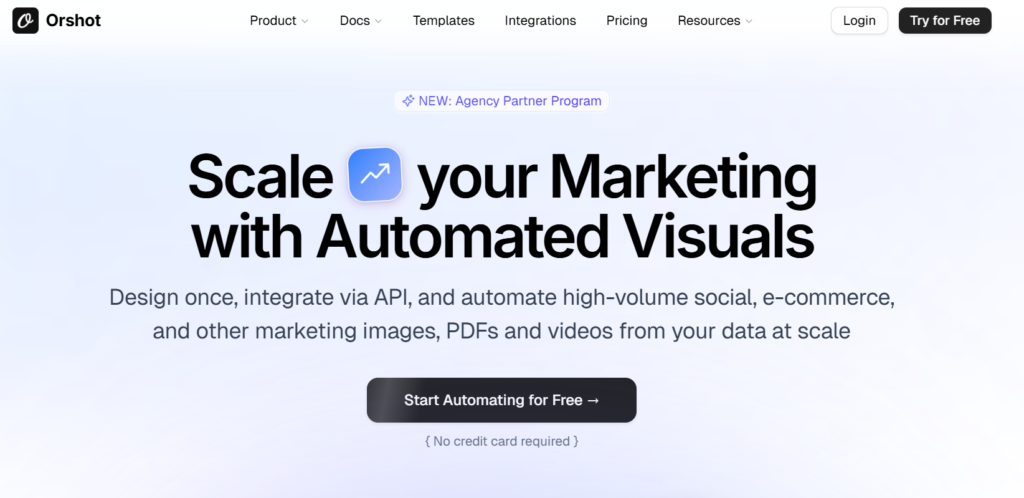
Orshot is built for teams and businesses that want automation without unnecessary complexity. Instead of overwhelming users with dozens of confusing features, it focuses on keeping things practical and manageable.
What really sets Orshot apart is how clean and straightforward it feels. You can automate marketing workflows, manage campaigns, and track performance without feeling lost inside the platform. It’s designed in a way that lets you focus on execution rather than setup. With Orshot Studio, you can render dynamic images from personalized templates.
Orshot works especially well for startups and growing companies that want structure in their marketing but don’t have time for heavy tools or long onboarding. If you value clarity, speed, and ease of use, Orshot is a strong option.
When comparing tools in this space, Orshot often stands out because it focuses on practical value rather than just features. Many users find that it is better than Abyssale with better pricing, especially when long-term usage and flexibility are considered. This makes it a more cost-effective option for startups and growing teams that want automation without high recurring costs.
Another strong advantage is flexibility for developers and product teams. Orshot offers a SDK for design editor, which allows businesses to build and customize design experiences directly into their own applications. This is particularly useful for teams that want more control instead of relying only on fixed templates.
2. Customer.io
Customer.io is known for its focus on behavior-based communication. It allows businesses to send messages based on what users do, rather than just who they are.
This tool is powerful when you want your emails or notifications to feel timely and relevant. For example, messages can be triggered when a user signs up, becomes inactive, or completes a specific action.
However, Customer.io works best for teams that are comfortable handling customer data and segmentation. It’s less about simplicity and more about precision. If personalization and user behavior are central to your marketing strategy, Customer.io is worth considering.
3. Brevo
Brevo is a popular choice among small and medium-sized businesses looking for an all-in-one marketing solution. It combines email marketing with basic automation features in a single platform.
The interface is user-friendly, and setting up simple automation flows doesn’t take much effort. Brevo is useful if you want to manage campaigns, contact lists, and automation without switching between multiple tools.
While it may not offer the depth of enterprise-level platforms, it delivers steady performance and reliability for everyday marketing needs.
Final Thoughts
Choosing the right marketing automation tool depends on how your business works and what you expect from automation.
- Orshot is ideal if you want simple, clean, and efficient automation
- Customer.io suits teams that rely heavily on user behavior and data
- Brevo is a good fit for businesses that want everything in one place
The best tool is the one that fits your workflow, not the one with the longest feature list.

