Many people focus on page size, images, Core Web Vitals, or mobile optimization while discussing website speed and SEO. These factors matter both for user experience and search performance. The fastest web hosting in India also delivers an impeccable user experience and near-zero downtime for all websites. However, one overlooked metric that many website owners ignore is the TTFB (Time to First Byte).
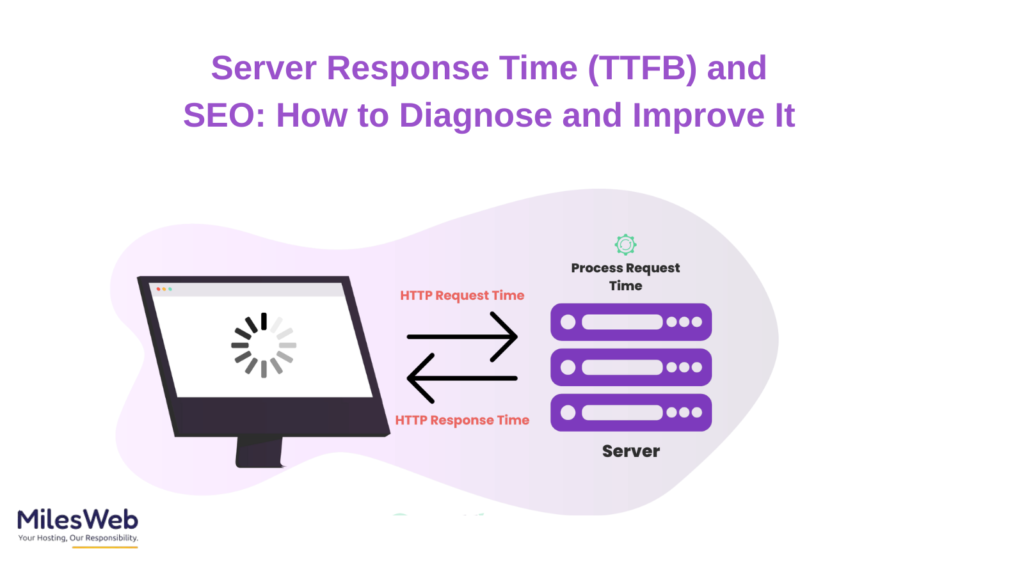
TTFB represents the time taken by a browser to load the first byte of data from the server. When a user requests the data, DNS converts the IP address into a domain name, allowing the browser to connect with the server and fetch the required data. High latency at this stage results in slower page loads for users who crawl and index the site less efficiently. Securing fast server response from low-price hosting in India creates a stronger technical foundation for SEO and user satisfaction.
Time Wastage Before the Page Loads
Speed is often measured after the page starts to render. But the user experience begins before content becomes visible on their device.
This is the time TTFB is relevant. If page loading is slow, users get trapped in the buffering state, leading to a poor user experience.
Reducing TTFB reduces the hidden time and enhances user experience.
Understand What TTFB is
TTFB is not the page load time. Rather, it’s the time it takes for your server to begin responding to the request.
DNS resolution, TCP connection, server response time, and the initial server response. A sluggish TTFB means the server is struggling to process the request, creating a delay that holds up the response time.
This metric diagnoses backend problems instead of front-end problems.
Slow Server Response Caused by Poor Hosting
High traffic on shared hosting, slow hardware, or infrastructure limitations leads to sluggish server response.
Website performance is unpredictable due to shared resources. Moving to better hosting, like optimized shared, VPS, cloud, or dedicated hosting, improves response time.
Improved hosting generally results in lower first-byte times.
Slow Themes and Plugins Add to Processing
With Content Management Systems (CMS) like WordPress, themes and plugins slow down the server. Each request generates database queries, scripts, and additional code processing.
Heavy or inefficient plugins and themes occupy storage, leading to higher TTFB.
Unnecessary plugins and themes increase TTFB.
TTFB Increases When the Database Is Slow
Databases are used to dynamically build websites. The TTFB is delayed when queries hit the database and take longer than normal due to its overload.
Excessive post-revisions, redundant data, or improperly optimized databases or queries can affect response time. For many websites, it all begins with the database.
Caching Can Reduce Server Workload Instantly
If pages aren’t cached, the server may have to generate each page multiple times. It takes longer to process, which increases TTFB.
Caching involves storing pre-built pages or database queries to be served faster. Full-page caching, object caching, and browser caching are all beneficial.
Caching can be one of the quickest ways to speed up the website.
Use a CDN to Improve Global Response Speed
Geographical location can also affect TTFB if your visitors are far from your server.
A Content Delivery Network (CDN) maintains copies of static files or cached content in multiple locations around the world. CDN routes traffic to the nearest global node, drastically speeding up page delivery for international users.
CDNs help global websites load much faster.
Test and Monitor TTFB Regularly
Several website owners only test their speed once the problem appears. However, TTFB should be monitored consistently because slowdowns often happen gradually.
Track Time to First Byte (TTFB) from tools like PageSpeed Insights, GTmetrix or via your hosting dashboard. If you encounter an increase in TTFB, recent plugin updates and possible traffic bottlenecks that could be putting a strain on the server.
Being proactive in addressing performance spikes is essential to protect search engines from a dip in conversion rates.
Wrapping It Up
TTFB is important for users as well as for SEO technical audits. Search engines penalize slow-loading pages due to adverse user experience. Some methods to reduce TTFB are choosing a better web hosting provider like MilesWeb, optimizing the database, eliminating unnecessary plugins, implementing caching techniques, and using content delivery networks.
The result is a faster, more reliable website with stronger search potential. In many cases, better SEO starts not on the page, but at the server.